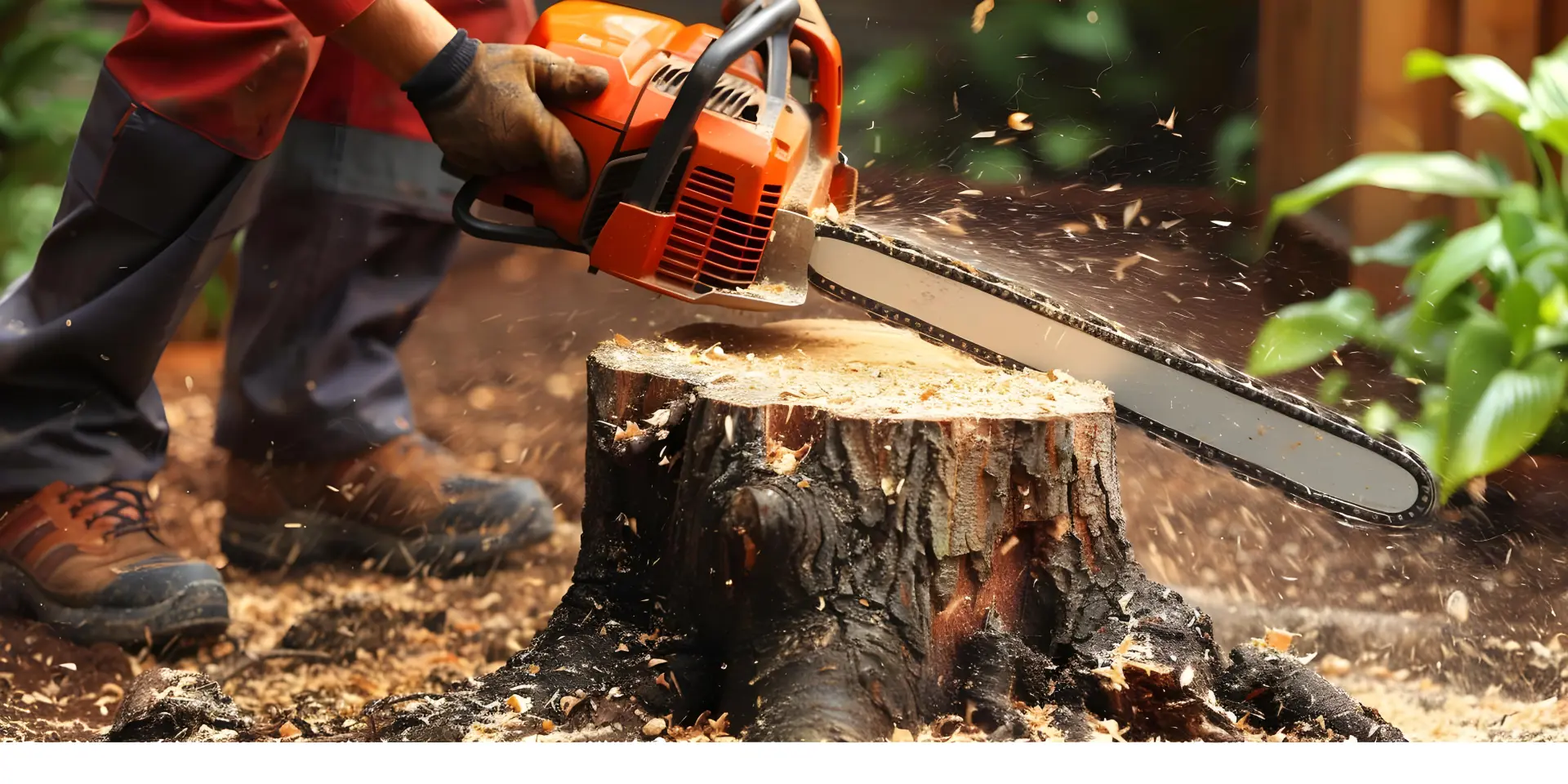
Arranging Emergency Tree Removal after A Storm is crucial. Find out when you need professional assistance to manage storm-damaged trees safely.
Who Is Responsible For A Storm-Damaged Tree?
On private land, the tree’s owner/occupier is generally responsible for making their land safe and arranging to have the tree removed. If a tree on your neighbour’s land blows onto your property during a storm, your own insurer typically covers the damage first, since recovering the tree from the neighbour usually requires proving negligence over the tree's health and maintenance.
If a tree blocks a public highway or road, the highway authority will usually clear the obstruction to make the road safe. However, the authority may re-charge the landowner for the damage if the tree came from private land.
Additionally, if a tree has brought down any electric lines, you should contact the local Distribution Network Operator (DNO) since they can handle electrical hazards and emergency clearance equipment, and for railways, the infrastructure operator typically deals with trees on the track.
How To Assess The Tree's Damage
When you're assessing a tree after a storm, it's crucial to keep people and pets away from the area, treat any downed lines as live, and avoid climbing or cutting the damaged tree yourself.
If the tree is protected by a TPO and is within a conservation area, urgent work is usually allowed in order to remove any immediate danger. However, you should keep evidence of the risks and notify the council since most non-urgent works must wait for formal consent.
Ideally, you should check the tree for stem defects first since any vertical cracks, spiral splits, crushed or buckled bark, and new cavities are signs that the tree's structure has been compromised.
Multiple or extensive cracks also increase the chances of the tree falling, and are signs that the tree needs to be removed as soon as possible.
Additionally, suspended “hangers,” broken tops, or large torn limbs (roughly 10-15 cm diameter and above) in the tree's crown are also signs that the tree may fall or pose significant health risks.
Clean, accessible breaks can sometimes be pruned back to suitable growth points; however, widespread crown damage can leave the tree unstable.
You should also factor in the tree's species and condition. Brittle or fast-growing species like poplar and willow can behave unpredictably during storms, and trees that are already affected by diseases, like ash with ash dieback, are more prone to breaking and need to be removed.
Signs A Tree May Fall
The clearest sign that a storm-damaged tree may fall is a new or worsening lean, especially if the tree tilts towards a house, pavement or driveway. Any fresh soil heave, lifted turf, gaps opening around the base, or exposed/creaking roots are signs that the tree's anchorage is failing and the tree is at a higher risk of collapsing.
You should also look for fresh cracks or splits along the tree's stem, such as vertical “zipper” cracks, spiral fractures, crushed or buckled bark, or cavities that weren’t there before.
Hanging or partly broken limbs (“hangers”) in the crown, a snapped leader, or large torn branches (roughly 10-15 cm diameter and above) are also signs that there is significant structural damage.
You may also notice rubbing branches, unusual creaking, or popping sounds, which are all signs that the tree's fibres are breaking under the tree's weight. It's also good to check for signs of decay like fungi, since it's a sign that the remaining wood is weaker than it looks and has a higher chance of snapping or collapsing.
When To Call 999 Or Your DNO
Generally, if there’s an immediate risk to life, you should call 999. However, if electricity infrastructure is involved but there’s no life-threatening emergency, you should call your Distribution Network Operator (DNO) on 105 instead.
You should call 999 straight away when a fallen tree has brought down live power lines that are arcing, sparking, burning, or lying across a busy road. This is because the combination of electricity and public exposure creates a clear danger that requires help from the fire department or police immediately.
You should also call 999 if a storm-damaged tree is clearly unstable and is about to fall onto a building, school, crowded area or road. A collapse risk is a huge public safety issue, and emergency removal services can secure the scene and prevent any injuries.
If anyone is injured, trapped, or needs medical help, call 999. Do not attempt to rescue anyone beneath unstable trees or near cables yourself; you should wait for trained responders to arrive since they have the right equipment and procedures to get everyone out safely. You should also call 999 when the obstruction is creating an urgent traffic hazard, such as blocking an A-road or a poorly lit route, since the police can close roads, set diversions, and coordinate other responders.
You should contact your DNO when a tree is touching, close to, or has damaged overhead lines or poles, but there’s no fire or immediate threat to your life. The DNO can de-energise and isolate the power lines and make the site electrically safe.
You should also call 105 if the power lines are hanging low, sagging, or are draped across any hedges, fences, gardens or quiet lanes. Even if the power seems off, you should always assume that the lines are live and wait for professional confirmation.
Additionally, if you spot any damaged poles, broken insulators, or a struck substation that's causing flickering lights, call your DNO. Even if there’s no medical emergency, the DNO will prioritise your call and dispatch crews.
Willow Tree And Garden Services is a trusted and fully insured team of arborists who provide safe and efficient tree removal services across Newcastle, Gateshead and Northumberland. We handle everything from TPO guidance to risk assessments and sectional dismantling. Protect your property and landscape with our qualified professionals.